

Table of Contents
Imagine this: a potential customer Googles your business, ready to learn more. But instead of glowing reviews or your best content, they see a negative comment or outdated info dominating the search results. Would they still choose you?
Most wouldn’t. BrightLocal’s 2026 Local Consumer Review Survey found that 97% of consumers read reviews before choosing a local business, and the share who will only use a business rated 4.5 stars or higher nearly doubled in a single year, from 17% to 31%. Small business owners feel it: in a Small Business Expo survey of 132 owners, 64.4% said a single negative review has at least a moderate impact on their business, and 43.2% called that impact major or significant.
That gap between what people find and what’s actually true is exactly what brand reputation management exists to close.
Highlights
- Your search results are your first impression. When potential customers look you up, what they see decides whether they ever contact you.
- Rapid URL indexers fast-track positive content visibility. These tools push search engines to notice your latest updates, testimonials, and blogs sooner, so outdated or negative pages stop owning page one.
- Brand reputation management combines monitoring, response, and promotion. Effective brand reputation management means tracking mentions, addressing negative feedback professionally, and showcasing your best content to shape your narrative.
- Faster indexing supports online reputation repair. Getting new pages seen quickly helps you improve rankings, increase content visibility, and suppress negative search results that no longer reflect your business.
- Affordable tools exist for every budget. Free and paid indexers cover different needs, from small campaigns to weekly updates, making online reputation management services for small business owners genuinely accessible.
- Local search is where the money is. Rapid indexing keeps your local pages fresh, driving more foot traffic and community awareness.
- Stay ahead of what’s next. AI-powered sentiment analysis, AI-driven discovery, and user-generated content are reshaping brand reputation protection.
Don’t leave your business’s first impression to chance. Here’s how to take control.
What Is Brand Reputation Management and How Does It Protect Your Brand?
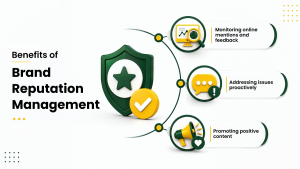
When someone Googles your brand, what do they see? The answer to that question defines your online reputation. Brand reputation management is the process of influencing, managing, and controlling that perception so customers and competitors experience the right “version” of your brand in a digital world you don’t fully control.
At its core, a brand reputation strategy involves three components:
Monitoring online mentions and feedback
You can only manage what you measure. Reputation work starts by keeping tabs on customer reviews, social posts, search results, and other online mentions of your business.
Addressing issues proactively
When negative reviews or misinformation surface, a clear process helps you respond swiftly and professionally to limit the damage.
Promoting positive content
Whether through blog posts, testimonials, or social proof, brand reputation management lets you strategically showcase the best side of your business.
Miss any one of the three, and the other two get harder. Monitoring without a response plan just tells you where the fire is. Publishing without monitoring means you’re guessing at what customers actually care about.
Why Brand Reputation Management and SEO Work Better Together?
Reputation and SEO are deeply interconnected. Brand reputation management ensures positive visibility exists; SEO decides whether anyone sees it. But businesses often face a frustrating lag between creating great content and having it show up in search rankings. That lag is where rapid indexing earns its place.
What Are Rapid URL Indexers?
A rapid URL indexer is a tool that speeds up the process of getting search engines to recognize (or “index”) newly published webpages, backlinks, and updates. Normally, Google crawls the web on its own schedule, and that delay leaves a gap where older, less favorable content keeps dominating search results.
One honest caveat: no tool can force Google’s hand. Google’s own documentation on asking Google to recrawl your URLs is clear that submitting a URL doesn’t guarantee indexing or ranking. Quality, relevance, and site health still decide the outcome. Indexing tools shorten the wait; they don’t replace the work.
The SEO Advantages in Detail
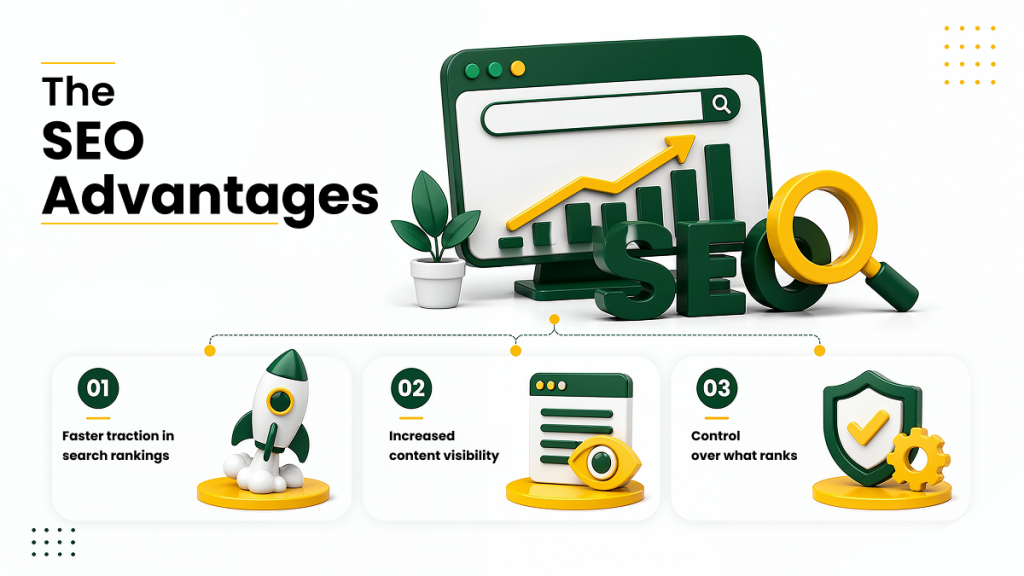
Used alongside a real brand reputation strategy, faster indexing gives you:
Faster traction in search rankings. The quicker your content and backlinks get indexed, the sooner they can start earning position.
Increased content visibility. Whether it’s a service announcement or a positive customer testimonial, content that surfaces sooner has more impact. This matters more than it used to: 74% of consumers now look for reviews and signals written in the last three months.
Control over what ranks. If damaging content or misinformation ranks highly for your brand name, indexing helps your accurate pages compete and, over time, suppress negative search results that no longer reflect reality.
For instance, a retail business launching a holiday campaign might create landing pages and blogs highlighting promotions. Getting those indexed quickly means customers find them when searching “holiday sales near me” instead of stumbling onto something outdated.
Free vs Paid Tools
Plenty of free rapid URL indexers exist for owners dipping their toes into brand reputation protection and SEO. These handle basic submissions and work fine for limited campaigns. Paid tools add bulk submissions, faster turnaround, and analytics on campaign performance. For businesses publishing frequently, like e-commerce stores running weekly promotions, paid options usually pay for themselves.
Free or paid, the real value is control. That’s why online reputation management services for small business owners have grown so quickly: most owners don’t have time to manually babysit search results.
Learn more: Effective Data Hygiene Techniques for Small Businesses
Challenges in Brand Reputation Management (and How Rapid Indexing Helps)
Brand reputation management sounds straightforward until you actually try it. Here are the two problems that trip up most businesses.
Negative Reviews
No business escapes criticism. From harsh Yelp reviewers to poorly contextualized Reddit threads, negative reviews can derail an otherwise excellent business. And the problem usually isn’t that criticism exists. It’s that criticism outranks everything good you’ve published.
This is where online reputation repair becomes a publishing problem, not a PR problem. You can’t delete a legitimate review, and you shouldn’t try to buy fake ones. The FTC’s Rule on Consumer Reviews and Testimonials bans buying, selling, and incentivizing fake reviews, with civil penalties attached. What you can do is publish enough credible, current, indexed content that the full picture wins.
Consistency Across Platforms
Brand reputation management also means keeping your message clear and cohesive everywhere. A stray review or an old page reflecting outdated hours, pricing, or positioning confuses customers and quietly costs you conversions. Refreshing that content regularly, then making sure search engines actually see the refresh, keeps your accurate messaging in front of people.
Rapid URL Indexing for Local SEO Success
If you’re running a small business, standing out in local search isn’t just important. It’s essential. Unlike general SEO, local SEO hones in on what’s relevant to your immediate community, and that’s where your bread and butter lives.
Think about it: when was the last time you searched for “coffee shops” and wanted results from another state? Google knows this too, which is why its algorithm prioritizes local relevance. Even moving up one position in local rankings can meaningfully lift click-through rates, driving more foot traffic and awareness.
Local reputation still carries weight offline, too. Small Business Expo research found that 86% of small businesses say word-of-mouth is very important or critical to their growth, yet 37.2% describe themselves as only slightly connected to their local community. That’s a visibility gap, and brand reputation management is how you close it: keep local pages fresh, keep them indexed, and keep them consistent with what people hear in person.
Learn more: How Small Businesses Can Create a Top B2B Marketing Strategy
Step-by-Step: How to Repair Your Online Reputation
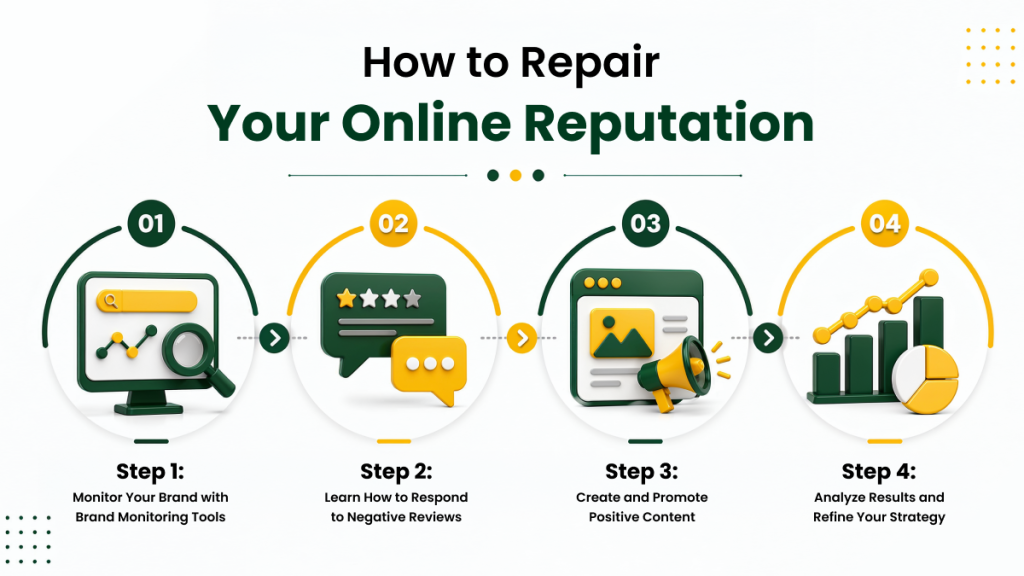
Protecting your business’s reputation might sound daunting, but with the right steps it becomes manageable. Each step below builds a working brand reputation strategy and supports faster indexing.
Step 1: Monitor Your Brand with Brand Monitoring Tools
You can’t manage what you can’t see. Start by setting up alerts to track online mentions of your brand and related industry keywords. Free brand monitoring tools like Google Alerts catch reviews, articles, and posts as they appear, and Google Search Console shows you exactly which pages Google has indexed for your brand name.
Don’t limit monitoring to Google. Watch Yelp, Facebook, TripAdvisor, and forums like Reddit. If your business serves a niche, find the spaces where your customers actually talk. An independent bookstore might track local community Facebook groups or literary forums.
Regular monitoring helps you catch problems early, spot opportunities, and stay informed. Consistency here is the foundation of everything else in brand reputation management.
Step 2: Learn How to Respond to Negative Reviews
No business is perfect, and every company gets criticized eventually. How you handle it says more about your credibility than the review itself.
For positive reviews, say thank you and mean it. Engaging with happy customers strengthens loyalty and encourages others to speak up. Negative reviews need a steadier hand. Don’t get defensive. Respond calmly, apologize where it’s warranted, and offer to resolve the issue offline.
Here’s what that looks like in practice:
“Hi [Customer’s Name], we’re truly sorry to hear about your experience. This isn’t reflective of our usual standard, and we’ll look into what went wrong during your visit. Please reach out to us at [email] so we can make it right. Thank you for the honest feedback.”
Knowing how to respond to negative Google reviews specifically is worth the extra minute: reply through your Google Business Profile, keep it public and professional, and never share customer details. Google’s guidelines on responding to reviews also explain how to flag reviews that violate policy, which is the only legitimate route to removal. Speed matters more than it used to. Roughly half of consumers now expect a reply within a day of posting.
This kind of visible accountability does double duty. It softens the critic and reassures every skeptical prospect reading over their shoulder.
Step 3: Create and Promote Positive Content
Now shape the narrative. Write blogs, share customer success stories, collect testimonials. Use video, graphics, and audio to add variety and credibility.
Once the content is live, submit it for indexing so search engines pick it up quickly. Say you’re launching a “Customer of the Month” series highlighting loyal patrons. Publishing alone isn’t enough. Getting it indexed fast is what keeps competitors’ older content from overshadowing it.
This is the engine of online reputation repair. Push credible content higher, and the negative results that once dominated get pushed down by everything true about your business. Press releases, backlinks, and updated local directory listings like your Google Business Profile all belong in the same pipeline.
Step 4: Analyze Results and Refine Your Strategy
Brand reputation management isn’t a “set it and forget it” task. It’s a cycle of effort, analysis, and adjustment. Use Google Analytics and your monitoring platforms to see what’s working.
Look for patterns in feedback and prioritize what you can act on. Are customers praising your response times but complaining about your return policy? That’s a product insight, not just a reputation one.
Above all, measure the outcome. How much faster is new content climbing? Are the results you wanted to suppress actually losing ground? If the answer is no after a few months, the problem is usually content quality, not indexing speed.
Learn more: Top 10 Methods to Raise Capital for Your Small Business
Future Trends in Brand Reputation Management
Reputation work has to keep pace with how people actually search. Four shifts matter right now.
AI-Powered Sentiment Analysis
Sentiment tools now use machine learning to evaluate feedback, identify tone, and flag trends before they become problems. Imagine a tool surfacing a cluster of reviews mentioning long wait times with negative sentiment scores. That insight lets you fix the staffing issue instead of just apologizing for it later. Acting on the signal quickly is what separates real brand reputation protection from monitoring theater.
AI Search and Voice Assistants
This one changed fast. BrightLocal found that consumer use of ChatGPT and other AI tools for local business recommendations jumped from 6% to 45% in a single year, making AI the third most common discovery channel behind Google and Facebook. Over the same period, Google’s share of local review-reading fell from 83% to 71%.
The practical implication: assistants and AI answers pull from indexed, crawlable sources. If your accurate pages aren’t indexed, they can’t be cited, recommended, or read aloud. Brand reputation management now includes making sure machines can find your side of the story.
Hyper-Localized SEO
Localization keeps tightening. Beyond ranking for “restaurants in Houston,” aim to own hyper-specific searches like “gluten-free brunch in Montrose” or “24-hour vet on Main Street.” That depends on consistent directory listings, steady reviews, and region-specific content that actually gets crawled.
User-Generated Content and Transparency
Customer reviews, photos, and social posts remain among the most trusted content, and video platforms are becoming review surfaces in their own right. Encouraging and amplifying that content is core to modern brand reputation management. So is owning mistakes publicly. Customers increasingly reward brands that are straightforward about what went wrong and what changed as a result.
Final Thoughts
Your online reputation isn’t just an asset. It’s your first point of contact with customers who haven’t met you yet. A strong one drives growth. A damaged one quietly costs you deals you never knew existed.
That’s why brand reputation management works best as a system: proactive monitoring, honest responses, consistent publishing, and fast indexing so the right pages actually surface. Whether you’re a local bakery recovering from a rough month of reviews or a startup outpacing negative press, the goal is the same. Make the true version of your business the easiest one to find.
Start with one audit this week. Google your business name, look at the first ten results, and write down which ones you’d want a serious buyer to see. That list is your online reputation repair plan.
And if you want to compare notes with owners solving the same problem, the Small Business Expo floor is full of them, along with the marketing, SEO, and review-platform companies exhibiting there. Some of the sharpest brand reputation strategy conversations happen between booths, not in a search result. Your reputation is your most valuable asset. Protect it deliberately.
For more insights, attend the Small Business Expo and network with leading entrepreneurs.

Frequently Asked Questions On Reputation Management
What is online reputation management (ORM)?
Online reputation management is the ongoing practice of monitoring, influencing, and improving how your business appears across search results, review sites, and social platforms. In practice, brand reputation management means three things working together: watching what’s being said, responding professionally, and publishing enough accurate content so people find the honest picture of your business first.
How do I push negative content down in Google results?
You suppress negative search results by outranking them, not by deleting them. Publish credible, genuinely useful content on properties you control (your site, blog, Google Business Profile, LinkedIn, press coverage), keep it current, and make sure each page gets indexed. Fake reviews and shortcut tactics are a legal risk under the FTC’s consumer review rule and tend to backfire. If the content is defamatory or violates a platform’s policy, report it through that platform’s process.
How often should I monitor my online reputation?
Weekly is a reasonable baseline for most small businesses, with automated alerts running in the background so nothing waits a full week. If you’re actively working through online reputation repair, or you’re a high-volume local business, check daily. Response speed expectations have tightened sharply: about half of consumers now expect a reply within 24 hours of posting.
Does online reputation affect SEO?
Yes, both indirectly and directly. Review volume, ratings, recency, and owner responses feed into local search visibility, while branded search behavior, click-through rates, and third-party mentions influence overall page performance. A reputation problem usually shows up as a traffic problem, which is why brand reputation management and SEO belong in the same plan rather than in separate ones.
Related
Why Your Brand-New Site Won’t Index — and the Launch Checklist That Fixes It
How to Attract More Visitors to Your Google Business Profile