

Table of Contents
Highlights
- A non disclosure agreement template helps businesses protect proprietary lead-generation frameworks, customer acquisition systems, conversion metrics, trade secrets, and internal workflows before sharing them with agencies, contractors, employees, investors, or acquisition partners.
- A unilateral non disclosure agreement template is typically used when only one party is sharing confidential information, while a mutual non disclosure agreement template is better suited for negotiations, partnerships, and joint projects where both sides exchange sensitive business data.
- Standard confidentiality periods often range from one to five years.
- While an NDA does not directly reduce CPL, the right non disclosure agreement template can help prevent revenue leakage.
Disclaimer: The content provided in this article is for general informational purposes only and does not constitute legal, tax, or financial advice. Small Business Expo is not a law firm, does not provide legal services, and does not act in any legal capacity. Readers should consult a qualified lawyer, tax professional, or financial advisor before acting on any steps or strategies mentioned below.
For small businesses navigating 2026, valuation and market dominance are driven by proprietary lead-generation frameworks, customer acquisition algorithms, and conversion data. Lowering your Cost Per Lead (CPL) while accelerating qualified lead pipelines requires sharing high-yield marketing frameworks and proprietary workflows with external growth partners. However, sharing these assets without bulletproof protection exposes your brand to intellectual property theft. A structured non-disclosure agreement template serves as a frontline financial asset that safeguards your customer acquisition strategies, hits your lower CPL targets, and drives bottom-line growth.
Executing robust confidentiality agreements ensures US small business founders can collaborate with AI marketing platforms, lead brokers, and agency consultants without exposing target audience intelligence. When learning how to start a business, entrepreneurs must safeguard proprietary funnel metrics and financial projections. Using a proven non disclosure agreement template before sharing these growth engines prevents voiding intellectual property rights or allowing competitors to steal your low-CPL strategies. Utilizing verified resources like the Rocket Lawyer NDA Template guarantees that early-stage disclosures remain legally binding and actionable.
Choosing the Right Non-Disclosure Agreement Template: Unilateral vs. Mutual
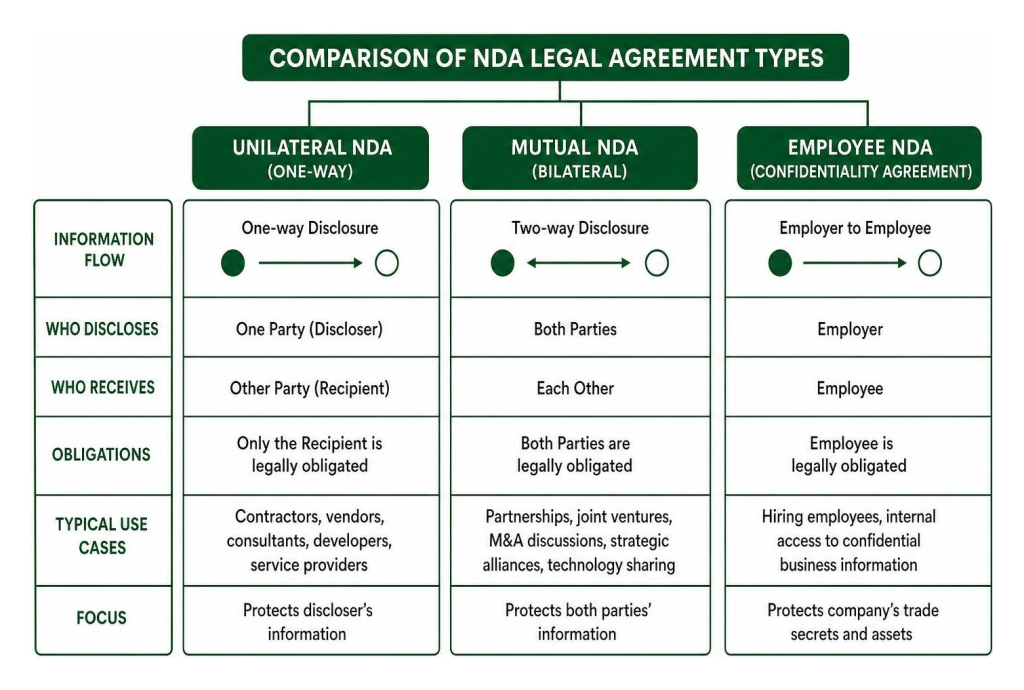
Selecting the correct structural arrangement for your non-disclosure agreement template depends on how information flows between your business and prospective growth partners. Choosing the wrong contract format can place unnecessary restrictions on your internal teams or leave key trade secrets unprotected.
- Unilateral (One-Way) Agreements: Deployed when your US company discloses proprietary customer acquisition frameworks to external specialists, software developers, or media buying consultants. A unilateral non disclosure agreement template ensures the receiving party assumes full confidentiality duties. Referencing a standard Unilateral NDA Legal Framework demonstrates how discloser-centric protections are drafted.
- Mutual (Bilateral) Agreements: Utilized when both entities share sensitive commercial data, such as joint venture marketing campaigns or co-branded lead generation initiatives. Mutual arrangements establish balanced trust during preliminary negotiations.
- Employee Confidentiality Agreements: Essential contracts tailored for internal staff. These contracts integrate trade secret protections with employee onboarding, securing internal databases, operational SOPs, and client rosters.
Protecting Intellectual Property with an Employee Non-Disclosure Agreement Template
Scaling revenue across US markets requires onboarding specialized talent to execute campaigns and optimize customer acquisition funnels. Recognizing the key signs your small business needs to hire its first employee means establishing strict legal protections for your business assets.
An employee-focused non-disclosure agreement template establishes clear post-employment covenants. It prevents departing staff from taking high-converting sales scripts, lead lists, or campaign architectures to competitors, protecting your low Cost Per Lead models and sustaining your market advantage.
8 Lethal Mistakes to Avoid: The Ultimate Non-Disclosure Agreement Template Framework for 2026
To ensure legally binding enforcement in US federal and state courts, a non-disclosure agreement template must avoid vague descriptions and set rigid operational boundaries. Deploying an effective non disclosure agreement template protects proprietary formulas while allowing your marketing partners to reach lower CPL targets safely. Standardized protocols from established platforms like Docusign NDA Contract Resources highlight essential clauses required for maximum legal protection:
- Identification of Parties: Full corporate legal names, state of incorporation, and primary US business addresses. Avoid trade names or DBAs that complicate court enforcement.
- Specific Purpose Clause: A precise definition of why data is shared (e.g., “Evaluating a digital marketing partnership to decrease CPL and optimize lead conversion rates”).
- Definition of Confidential Information: Explicit categories covering sales funnels, customer lists, software algorithms, proprietary ad copy, and campaign performance data within your non-disclosure agreement template.
- Standard Exclusions: Clear statutory carve-outs exempting public domain knowledge, independent development, and legally compelled disclosures.
- Receiving Party Duties: Mandatory standards of care restricting information usage solely to the business evaluation and limiting access to vetted personnel.
- Duration and Term Limits: Concrete expiration dates for commercial data paired with survival provisions for core trade secrets in every non disclosure agreement template.
- Return or Destruction Procedures: Strict timelines for returning or certifying the deletion of physical and digital records.
- Breach Remedies and Jurisdiction: Clauses granting immediate injunctive relief rights and designating governing US state laws.

Defining Confidential Information and Standard Legal Carve-Outs
US courts routinely invalidate overly broad secrecy agreements that claim “everything shared is confidential.” To enforce trade secret protections, your customized non-disclosure agreement template must specifically enumerate protected categories—including lead data, pricing algorithms, audience segments, and conversion benchmarks—and require digital files to be designated as confidential. When disclosures occur verbally, delivering a written summary confirming confidentiality within days is best practice.
Equally critical are standard legal carve-outs. An enforceable non-disclosure agreement template exempts details that:
- Enter the public domain through no fault of the recipient.
- Were legally possessed by the recipient prior to disclosure.
- Are independently created without using the protected assets.
- Are received lawfully from an unrestricted third party.
- Must be disclosed pursuant to a valid judicial order or legal subpoena.
Clear exclusions preserve contractual validity while aligning with core operational standards like defending your brand cybersecurity measures for small businesses.
Determining Duration and Post-Termination Survival Terms
NDAs do not remain in force indefinitely without explicit survival provisions. Standard US business agreements assign confidentiality terms between one and five years, with two years serving as a standard baseline.
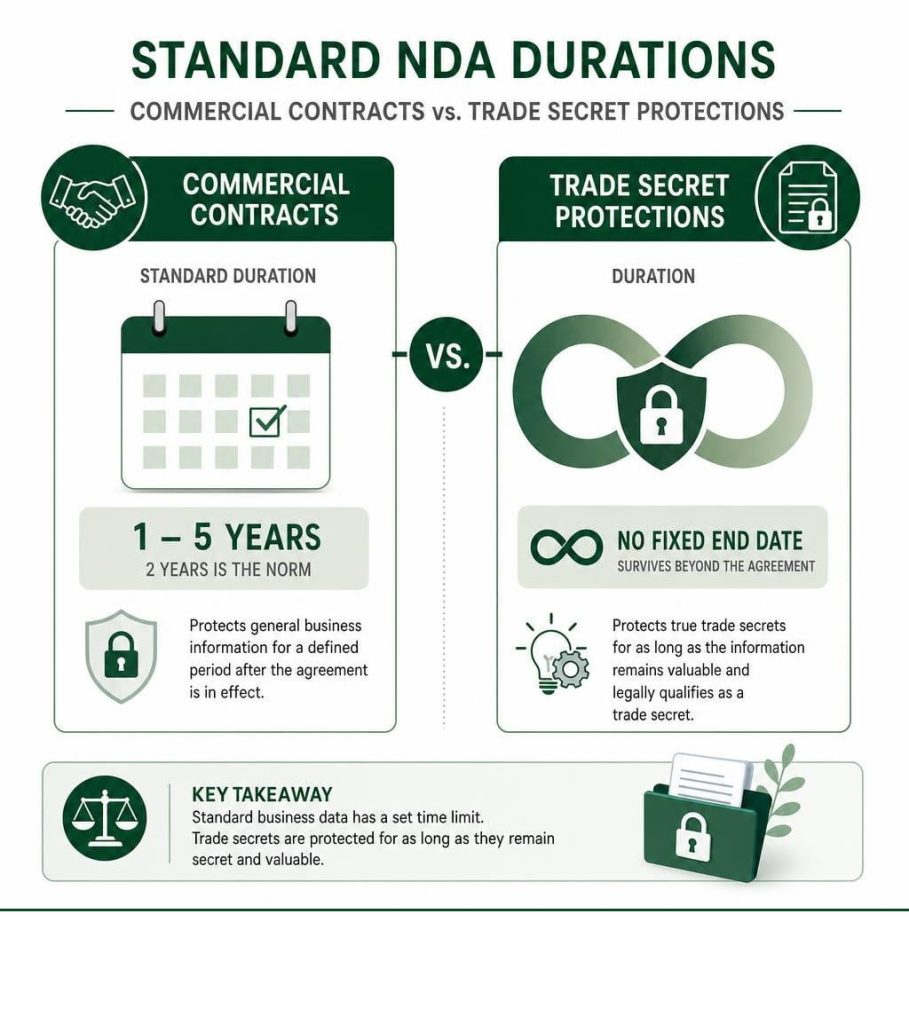
However, core trade secrets—such as proprietary AI bidding algorithms or patented tech architectures—require indefinite protection. An optimized non-disclosure agreement template incorporates survival provisions stating that trade secret obligations remain active for as long as the underlying information qualifies for legal trade secret status.
Shocking Legal Pitfalls: How US Small Businesses Enforce NDA Breach Remedies in 2026
When a partner leaks confidential audience data or marketing workflows, calculating precise monetary damages can be challenging. Consequently, securing emergency injunctive relief—a court order compelling the violating party to cease unauthorized disclosures immediately—is a crucial defense mechanism for small business owners. Incorporating strong remedy provisions in your non-disclosure agreement template protects your investments and ensures lower CPL strategies remain proprietary.
Under the US Defend Trade Secrets Act (DTSA), contracts covering trade secrets must include an explicit whistleblower immunity notice. This statutory notice protects employees and contractors from civil or criminal liability when reporting potential law violations to federal or state authorities. Omitting this language from your non disclosure agreement template blocks a company’s ability to recover exemplary damages or attorney fees during trade secret litigation.
Enforceability relies on selecting an appropriate US state governing law and jurisdiction where your company operates. Additionally, ensure your signature capture protocol complies with federal ESIGN Act standards to maintain full digital legal validity across every executed non-disclosure agreement template. Consulting a small business attorney can help customize your agreements to meet state regulations. Reviewing templates such as the Legal Templates NDA Reference can assist in aligning contracts with legal standards.

The Secret M&A Strategy: Customizing Your Non-Disclosure Agreement Template for Massive Deal Multiples
Generic boilerplate contracts fail to protect small businesses entering corporate investments or M&A negotiations. Pitching venture capital firms or onboarding media teams requires tailored contractual provisions within your non-disclosure agreement template to hit performance benchmarks and maintain lower CPL metrics:
- Investor and VC Pitches: Institutional investors in the US frequently decline early-stage NDAs to prevent portfolio conflicts. To protect your company, withhold core software code and proprietary lead models during initial meetings. When investors agree to sign, adapt your non-disclosure agreement template to protect proprietary algorithms and conversion metrics. Reviewing the top 10 game changing methods to raise capital for your small business provides guidance on managing trade secrets during capital raises.
- M&A Due Diligence: Mergers and acquisition processes require complete transparency into customer databases and revenue channels. A specialized non disclosure agreement template used in due diligence should feature non-circumvention clauses alongside standard confidentiality provisions. Non-circumvention restrictions prevent prospective buyers from contacting your vendors, key clients, or key staff directly.
- Subcontractors and AI Marketing Platforms: When integrating modern AI marketing engines or external media buyers to reach lower CPL targets, require back-to-back non-disclosure agreement template execution before sharing audience data or CRM integration keys.

Final Thoughts: Scale Your US Small Business Revenue Safely in 2026
A robust non-disclosure agreement template serves as a vital risk-management tool that safeguards your lead generation channels, proprietary technologies, lower CPL targets, and overall revenue potential. By defining confidential information, setting appropriate duration terms, and complying with US federal trade secret requirements, your business can enter high-stakes discussions with complete confidence using an updated non disclosure agreement template.
Safeguarding proprietary assets is the foundational step; connecting with strategic industry leaders is the next. To scale your market presence and partner with vetted industry founders, Attend Small Business Expo Events across major US cities. Work with a qualified small business lawyer to review your legal agreements before executing major commercial contracts.

Frequently Asked Questions About NDA Contracts
What is the standard duration for a non-disclosure agreement?
Commercial NDAs generally specify fixed durations ranging from one to five years, with two years being standard for standard commercial exchanges. However, obligations covering genuine trade secrets should be drafted to survive agreement expiration, remaining protected indefinitely for as long as the information retains trade secret status under law.
What happens if a receiving party breaches a non-disclosure agreement?
Violating an NDA opens the breaching party to severe legal liabilities. The disclosing company can file for emergency court injunctions to stop further leaks, seek financial damages for lost revenue, and recover legal expenses where permitted by contract terms. Breaches may also trigger immediate contract termination and employment dismissal.
Can an NDA prevent an employee from reporting illegal activity?
No. An NDA cannot lawfully restrict individuals from reporting illegal acts, regulatory violations, or harassment to law enforcement agencies or regulatory bodies. Under federal trade secret laws, contracts must incorporate explicit whistleblower immunity provisions protecting individuals who disclose information to government authorities or legal counsel to investigate suspected legal violations.