
Table of Contents
For any small business marketing manager, integrating social media into marketing management is a strategic necessity you can’t overlook. It is not just a tool for social interaction; it’s a pivotal part of an effective marketing approach that can elevate a business’s market position.
This article explores how small businesses can strategically integrate social media into their marketing strategy, covering its significance, practical steps for integration, potential challenges, actionable tips, and future trends.
By the end, you’ll understand how to navigate the marketing process to maintain and grow your customer base through social media.
Significance of Social Media in Modern Marketing
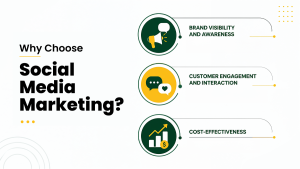
Brand Visibility and Awareness
Social media platforms are bustling marketplaces where brands can capture their target market’s attention. Data from platforms like Facebook and Instagram shows these sites expand brand reach and boost visibility beyond traditional methods; around 58% of consumers now say they discover new businesses through social media.
For instance, a local boutique that leverages Instagram can showcase its products to a global audience, thereby increasing its market position. This is where a marketing manager shines: maintaining consistent, high-quality content aligns with the brand’s identity and turns social media into a 24/7 billboard.
Customer Engagement and Interaction
As we transition from visibility to connection, the era of one-way communication is long gone. Social media lets small businesses engage in real-time conversations, improving customer service and satisfaction. Consider a café that uses X (formerly Twitter) to respond to feedback instantly, fostering community and increasing customer satisfaction. Moreover, marketing professionals have found that businesses engaging with their audience on platforms like Facebook see heightened loyalty. Direct interaction not only humanizes the brand but also provides insights into customer needs, allowing businesses to tailor their product or service effectively.
Cost-Effectiveness
In marketing management budgeting, social media offers a cost-effective alternative to traditional advertising methods. Unlike costly TV or print ads, social media marketing campaigns can fit any budget while reaching a targeted audience.
A cost-benefit analysis shows that small businesses investing in social media often see a higher return on investment; industry estimates put average social advertising returns near $5 for every $1 spent. This budget-friendliness makes social media indispensable for marketing managers with limited resources, enabling businesses to achieve significant results and increase sales without substantial expenditure.
Practical Steps for Integration: A Marketing Manager’s Checklist
Setting Clear Objectives
Before diving into social media, it’s crucial to set clear, measurable objectives, a core part of the planning work a marketing manager owns. Successful small businesses set goals such as increasing brand awareness by 20% or boosting website traffic through social media initiatives. These objectives not only guide the marketing strategy but also serve as benchmarks to measure progress. For instance, a local bookstore might aim to increase online sales by promoting exclusive events, ensuring every post aligns with this overarching goal.
Choosing the Right Platform
After setting your objectives, the next step is to choose the right social media platform, like selecting the ideal spot in your target market. Each platform has its own demographic, and understanding where your audience spends their time is crucial. For example, Instagram’s visually-driven audience suits a fashion brand, while LinkedIn is ideal for B2B services. Engagement data sharpens the case: TikTok now averages roughly 3.7% engagement per post, while Instagram business accounts average 0.3-0.48%. Analyzing platform demographics helps a digital marketing manager focus efforts effectively, ensuring maximum impact with minimal waste.
Crafting Compelling Content
Finally, content is the lifeblood of social media marketing, and crafting a compelling strategy is key to resonating with your audience. Effective content strategies, the kind a content marketing manager builds, often include a mix of educational, entertaining, and engaging posts that align with business goals.
Developing a content calendar ensures consistency and strategic planning around key events or promotions; for most small businesses, three to five posts per week per platform is a sustainable baseline. For instance, a local bakery planning posts around National Dessert Day can use mouth-watering visuals to captivate its audience.
Learn more: Ultimate Guide to Success: How to Grow a Small Business
Potential Challenges and Solutions
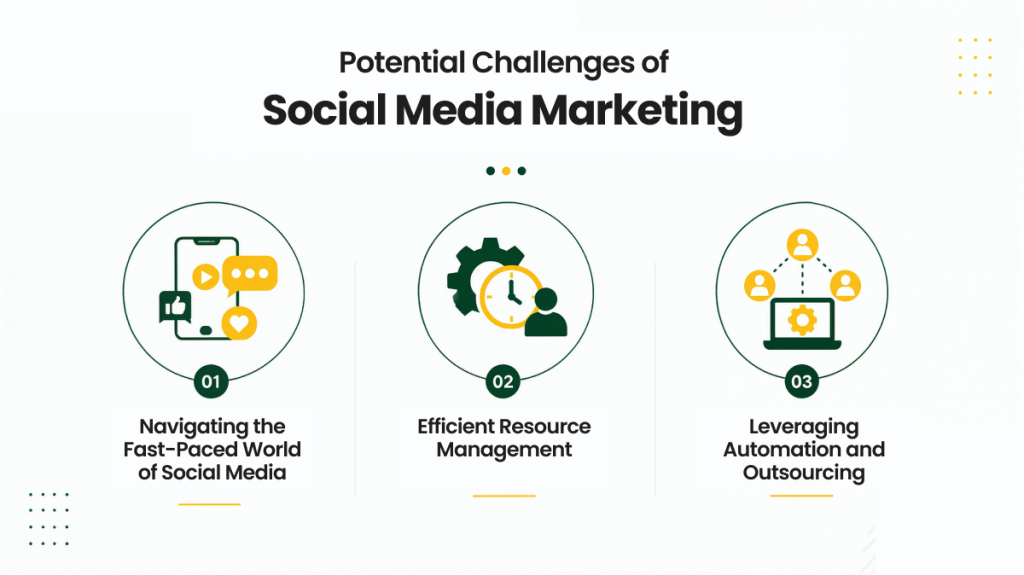
Navigating the Fast-Paced World of Social Media
The fast-paced nature of social media can be overwhelming, with trends changing constantly. Staying informed is crucial to maintaining relevance in a channel that shifts weekly. Tools like Google Trends and social listening platforms can help identify emerging trends, while engaging with industry thought leaders ensures your strategy remains fresh and forward-thinking.
Efficient Resource Management
However, balancing social media efforts can strain resources. Efficient resource management involves prioritizing tasks and setting realistic goals. Small businesses can optimize their efforts by dedicating time blocks for social media planning. Empowering team members with responsibilities can ensure consistent engagement without overwhelming a single marketing manager.
Leveraging Automation and Outsourcing
To further enhance efficiency, social media automation and outsourcing can make a real difference for small businesses. Tools like Hootsuite or Buffer allow you to schedule posts and track performance, ultimately saving time and effort, while connecting marketing automation and social media keeps your email, CRM, and posting calendar telling the same story.
It also helps to know what you’re trading away. So what are the risks of automating social media publishing? A scheduled post can go live during a crisis or local emergency and read as tone-deaf; automation can’t reply to a comment or defuse a complaint in the moment, and aggressive tactics like bulk following or unauthorized bots can violate platform terms.
Teams comparing the most effective social media scheduling tools for multi-brand agencies should look past the posting calendar to approval workflows, role permissions, and reporting that rolls up across accounts. Additionally, outsourcing to specialists brings expert knowledge to your strategy, ensuring a professional and impactful presence across ever-changing platforms.
Actionable Tips for Social Media Success
Captivating Content Creation
Creating content that truly captures attention is crucial for achieving success in today’s competitive feeds. Techniques like storytelling, which involves weaving relatable narratives that resonate with the audience, can foster a deeper emotional connection. Additionally, high-quality visuals, such as vibrant images and engaging videos, play a significant role in drawing viewers in, making the content more appealing and shareable; 93% of marketers say video is an important part of their strategy. Moreover, interactive content, such as polls and quizzes, can significantly boost engagement by inviting users to participate, turning passive viewers into active contributors.
Measuring Social Media Impact
Assessing the impact of social media efforts requires a keen focus on metrics, as these numbers provide essential insights into the effectiveness of various strategies. Tools like Google Analytics offer valuable data on engagement rates, website traffic, and user behavior, allowing businesses to track how their audience interacts with their content. This is also where most small businesses fall short: proving return is one of their top three marketing challenges, and social media marketing ROI is the number most often left uncalculated. Regularly reviewing these metrics not only helps a marketing manager understand what works but also lets them fine-tune strategies as business needs and audience preferences change.
Building a Thriving Community
Building an active and thriving community around a brand requires genuine interactions and a commitment to customer engagement. Responding promptly to comments and messages shows customers their input is valued and encourages further dialogue. Additionally, hosting live Q&A sessions, where businesses answer questions in real time, can significantly boost engagement and foster community participation and loyalty.
Successful businesses recognize the importance of nurturing these relationships, creating brand advocates who not only support the brand but also amplify its message through word-of-mouth and social sharing, ultimately driving growth and success.
Learn more: How Often Should A Small Business Post On Social Media?
Industry-Specific Examples
The Power of Social Media in Retail
For retail businesses, Instagram and Pinterest are powerful platforms for showcasing products. High-quality images capture attention and drive sales. Case studies also show that Instagram Shopping streamlines the buying process and enhances the customer experience.
Reputation Management in Hospitality
In hospitality, reputation management is key. Platforms like Facebook and TripAdvisor offer opportunities for feedback and engagement. Encouraging reviews and responding promptly enhances trust and attracts new patrons, while showcasing customer experiences serves as a powerful marketing tool.
Leveraging LinkedIn for B2B Services
For B2B services, LinkedIn is ideal for professional networking. Sharing insights and case studies can position a business as a field leader. Engaging with industry groups and discussions not only expands the network but also attracts new opportunities, proving LinkedIn’s value.
Future Trends in Social Media Marketing
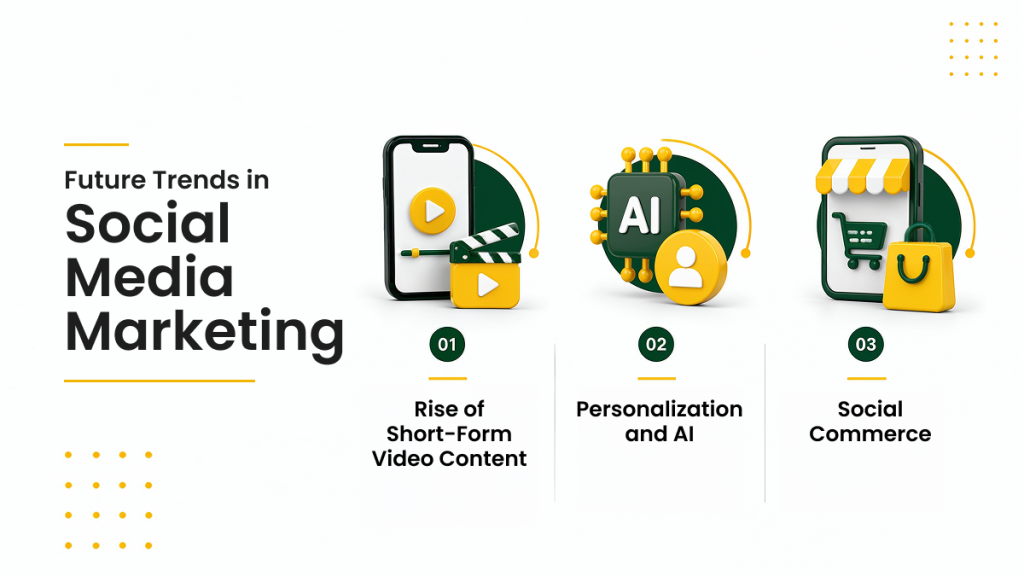
Rise of Short-Form Video Content
Short-form video marketing is rapidly gaining traction, engaging audiences more effectively than any other format. HubSpot’s 2026 State of Marketing data ranks short-form video as the highest-ROI content format, cited by roughly 49% of marketers, ahead of long-form video, live streaming, and written content. As a result, investing in video content not only enhances strategy but also captures attention in dynamic ways.
Personalization and AI
Building on this engagement, AI-powered personalization is reshaping marketing. Algorithms now tailor content to individual preferences, enhancing the user experience and boosting engagement. As a result, businesses using AI-driven insights can refine their strategies and deliver more relevant messaging to their audiences.
Social Commerce
Social commerce is also blurring the lines between social media and e-commerce. As platforms integrate shopping features, they offer smoother buying experiences for users; US social commerce sales are set to pass $100 billion for the first time in 2026. For small businesses, this trend enhances the customer journey and opens up new growth opportunities.
Final Thoughts
Integrating social media into small business marketing management is not just beneficial; it’s essential. From boosting brand visibility and fostering engagement to offering cost-effective solutions, social media is a powerful marketing tool. As platforms and formats keep shifting, staying informed is key. By prioritizing social media integration, a small business owner or marketing manager can open up new opportunities and set the business up for long-term success.
Are you ready to take your marketing management skills to the next level? Join us at the next event hosted by The Small Business Expo. We’ll explore essential topics, including the best approaches to social media content. Connect with fellow entrepreneurs, exchange insights, and learn effective strategies to optimize your marketing efforts. And if your business sells to small business owners, the show floor is where thousands of them spend the day.

Frequently Asked Questions On Marketing Management Approach
How should a small business use social media for marketing in 2026?
Start with one or two platforms your customers actually use rather than maintaining a thin presence across six. Set a measurable objective for each- leads, bookings, traffic, or sales- and weight your content mix toward short-form video, since that is the format currently delivering the strongest returns. Review performance monthly and cut what isn’t working. For a small business marketing manager, focus beats coverage almost every time.
How often should a small business post on social media?
Three to five posts per platform per week is a reliable baseline for most small businesses, with Instagram and TikTok tolerating a higher cadence and LinkedIn rewarding fewer, higher-value posts. Consistency matters more than volume, since platform algorithms increasingly suppress low-effort filler. Two strong posts a week will outperform seven forgettable ones.
Is organic social media still effective, or do I need to pay?
Organic still works, but it works differently now. Reach for business pages has fallen as platforms prioritize paid placement, so use organic content to build trust, answer questions, and nurture people who already know you. Paid is how you reach people who don’t. Most small businesses get the best results by allocating a small, targeted budget to the organic posts that already perform well.
How do I create a social media content calendar?
Start with your fixed dates, promotions, events, seasonal peaks, product launches, and place those first. Fill the remaining slots using a simple rotation of content types, such as educational, behind-the-scenes, customer stories, and promotional, so no single format dominates. Plan two to four weeks ahead rather than three months, leave open slots for timely content, and use a scheduling tool for publishing while keeping replies and comments handled live.
Related
Stop Wasting Marketing Budget And Hire Professional Lead Generation Companies