

Table of Contents
Learning how to start a business in 2026 is no longer about having the most capital; it is about having the most efficient systems. While over 5.5 million new business applications were filed last year, the vast majority will struggle to break even. To join the elite tier of profitable owners, you must follow a revenue-first framework that prioritizes qualified leads over vanity metrics.
Highlights
- Efficiency Over Capital: Success in the 2026 market depends on high-efficiency systems and solving high-friction problems rather than just initial funding.
- Legal and Asset Protection: Choosing a Limited Liability Company (LLC) structure provides a critical “corporate veil” to protect personal wealth from business litigation.
- Profit-First Financials: A mandatory 30% tax reserve and automated “Profit-First” banking systems prevent the common cash flow failures that sink most startups.
- Scalable Frameworks: Implementing “Ghost-Owner” systems and AI-driven workflows allows a business to function as a standalone asset without the founder’s constant presence.
- Local Authority Marketing: Dominating local SEO and claiming Google Business Profiles offers a cost-effective alternative to increasingly expensive digital advertising.
- Rapid Execution: The first 90 days of how to start a business must focus exclusively on a “Revenue Blitz” to reach the first $10,000 in profit through MVPs and risk-reversal offers.
With over 36.2 million small businesses currently active in the US, the competition is fierce. However, small businesses created 9 out of 10 net new jobs last year, proving that the opportunity for agile, standalone ventures is massive. If you want to know how to start a business that survives the 2026 economic shift, you must stop treating your venture like a hobby and start treating it like a high-yield asset.
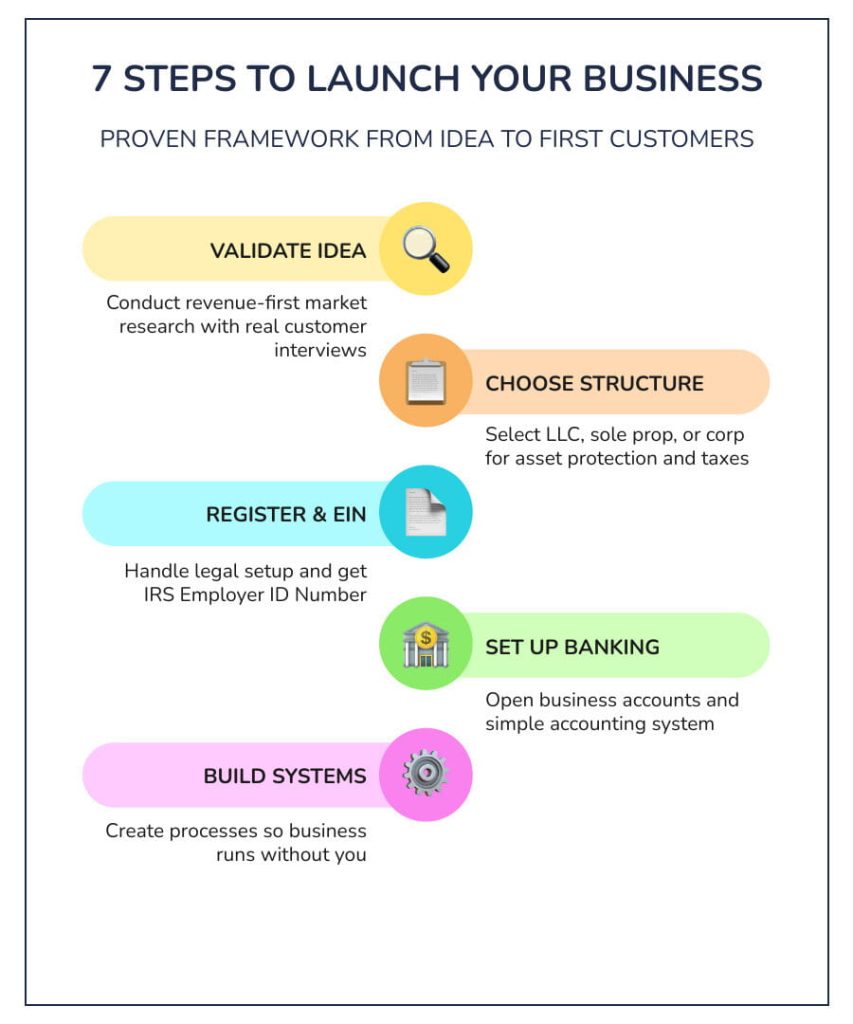
Step 1: Stop Validating Ideas: Why 2026 Entrepreneurs Are Using ‘Reverse-Demand’ Audits Instead
Traditional market research is dead. In 2026, asking people “would you buy this?” leads to false positives and wasted capital. Instead, the most successful founders learning how to start a business use a “Reverse-Demand Audit.” This involves identifying where current market leaders are failing their customers. By analyzing 1-star reviews, forum complaints, and social media rants, you find the “starving crowd” that is already looking for a solution you haven’t even built yet. This method shifts the focus from “creating demand” to “capturing existing frustration.”
When you focus on how to start a business, your goal is to solve a high-friction problem. Service-based models like specialized AI consulting or high-end home automation services are currently seeing the highest margins because they address specific 2026 pain points. You should understand why every startup should have a market research budget to fund these deep-dive audits. Before spending a dollar on branding, ensure you have at least five “Letter of Intent” documents from potential clients who are ready to pay once you go live. This psychological commitment is the only validation that matters in a crowded marketplace.

Effective validation in 2026 requires looking at the 10 steps to start your business from the SBA through the lens of modern data. Don’t just look at market size; look at market velocity. How fast is the problem growing? If you are learning how to start a business, you need a strategic financial model that accounts for customer acquisition costs (CAC) from day one. This helps you avoid the top 3 hidden challenges entrepreneurs face when starting a business, specifically the trap of “growth at any cost” which often leads to bankruptcy before the first year is out. By utilizing sentiment analysis tools to scrape Reddit and Quora, you can identify the exact language your future customers use to describe their pain, allowing you to write copy that resonates instantly.
Step 2: The ‘Asset-Shield’ Strategy: Choosing a Structure That Protects Your Wealth from 2026 Market Volatility
Choosing a legal structure isn’t just about taxes; it’s about building a firewall between your business risks and your personal life. In an era of increased litigation and economic shifts, knowing how to start a business requires a structure that offers maximum protection. If you operate as a sole proprietor, you are essentially betting your house and your children’s college fund on your business’s success. The legal landscape in 2026 is more complex than ever, and personal liability is a risk no modern entrepreneur should take.

To avoid the common pitfalls to avoid when starting a small business, most 2026 entrepreneurs should look toward the LLC. It provides the “corporate veil” necessary to keep your personal assets safe while maintaining the simplicity of pass-through taxation. When researching how to start a business, consider the following comparison:
|
Feature |
LLC (Limited Liability Co.) |
S-Corp Election |
C-Corp |
|---|---|---|---|
|
Asset Protection |
High |
High |
Maximum |
|
Tax Strategy |
Flexible Pass-through |
Self-Employment Tax Savings |
Double Taxation |
|
2026 Suitability |
Best for Solopreneurs |
Best for $75k+ Profit |
Best for VC Funding |
As highlighted in this guide on how to start a business and key considerations, the LLC is the most versatile tool for the modern entrepreneur. It allows you to start small but scale into more complex tax strategies as your revenue grows. If you are serious about how to start a business, the LLC is your primary defense against personal financial ruin. Furthermore, ensure you draft a robust Operating Agreement even if you are a single-member LLC; this document is critical for proving the separation between you and the entity during legal audits or disputes.
Step 3: Bypass the Legal Gatekeepers: The 15-Minute Digital Formation Hack for 2026
In 2026, you don’t need a $500-an-hour lawyer to file your paperwork. Most states have moved to “Instant-Approval” digital dashboards. You can file your Articles of Organization and receive your state-stamped documents in less time than it takes to order lunch. When you are figuring out how to start a business, speed to market is your greatest advantage. Filing fees remain manageable, with the national average sitting around $125, though savvy entrepreneurs in states like Wyoming or Nevada often enjoy even lower costs and better privacy laws.
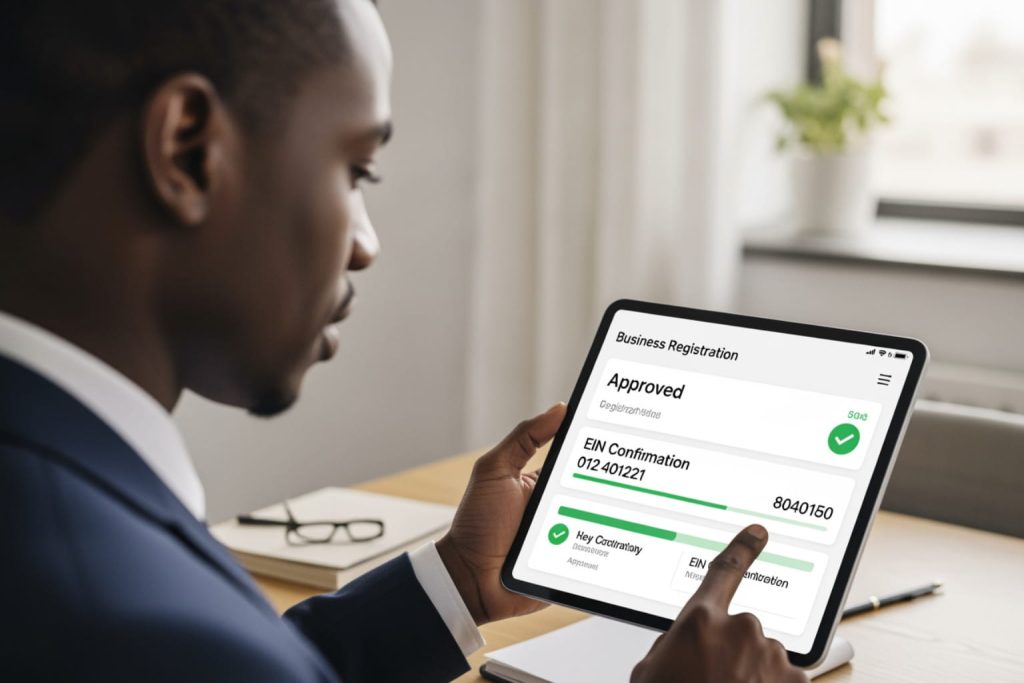
Your next critical move is securing an Employer Identification Number (EIN). This is the “Social Security Number” for your entity and is mandatory for anyone learning how to start a business who intends to hire contractors or open a bank account. You can get this for free in minutes on the IRS website. For a comprehensive look at these early hurdles, refer to the startup guide for the aspiring entrepreneur.
Step 4: Stop Leaking Cash: The ‘Profit-First’ Banking Setup That Guarantees Your First Dividend
The most common reason standalone businesses fail is not a lack of revenue, but a lack of cash flow management. When you learn how to start a business, you must implement a “Profit-First” banking system. This means having at least four separate accounts: Income, Profit, Taxes, and Operating Expenses. By allocating a percentage of every incoming dollar to these accounts immediately, you ensure that your taxes are always covered and that you, the owner, actually get paid. This prevents the “plate-licking” effect where you spend every dollar available in a single account.

Understanding how to become an entrepreneur involves mastering the “30% Rule.” Always set aside 30% of your gross revenue for the IRS. In 2026, AI-driven accounting tools like Xero or QuickBooks can automate this process, moving money between accounts based on pre-set rules. This level of automation is essential for how to start a business because it removes the emotional temptation to spend “tax money” on growth experiments. For more financial insights, see ADP’s guide on starting a small business.
By automating your back office, you can reclaim up to 20 hours a week. In 2026, manual data entry is a liability. If your accounting system doesn’t talk to your CRM and your bank account, you are losing money through inefficiency. A truly successful how to start a business model relies on real-time data to make pivot-or-persevere decisions every single week.
Step 5: The ‘Ghost-Owner’ Framework: How to Build a Business That Prints Money While You Sleep
If your business requires you to be present to generate revenue, you don’t have a business—you have a high-stress job. To master how to start a business, you must implement the “Ghost-Owner” framework. This involves using “Agentic Workflows”—AI agents that handle lead triage, customer support, and basic project management without human intervention. By the time you hire your first human freelancer, your systems should already be doing 80% of the heavy lifting. This allows you to focus on high-level strategy rather than low-level execution.
Creating Standard Operating Procedures (SOPs) is the foundation of this framework. Every recurring task must be documented so that a virtual assistant or an AI tool can execute it perfectly. Explore these 5 growth strategies for new entrepreneurs to see how to transition from a “doer” to a “system architect.” When you focus on how to start a business, you are building an asset that has market value because it functions independently of its creator. If you can’t step away for 30 days without the business collapsing, you haven’t built a standalone entity yet.

According to the Step-by-Step Guide for All 50 States, scalability is the ultimate goal. A business that can stand alone is one that can be sold for a multiple of its earnings. In 2026, buyers aren’t looking for your personal talent; they are looking for your automated revenue engine. If you want to know how to start a business that creates true wealth, you must build it to be replaceable. This means using tools like Zapier or Make.com to connect your tech stack so that data flows seamlessly from lead capture to service delivery without manual intervention.
Step 6: Forget Expensive Ads: The ‘Local-Authority’ Loophole for Flooding Your Inbox with Qualified Leads
In 2026, the cost of digital advertising has skyrocketed, making it nearly impossible for new startups to compete on price. However, the “Local-Authority Loophole” allows you to dominate your niche by focusing on hyper-local SEO and AI-generated content clusters. By claiming your Google Business Profile and optimizing for “near me” searches, you can capture high-intent leads who are ready to buy right now. This is the most effective way to grow revenue when learning how to start a business on a budget. Local trust is the new global currency.
If you want to skip the “zero-to-one” phase, you might even consider how to buy a small business that already has an established local presence. Otherwise, focus on becoming the “helpful authority” in your space. Use AI to generate 50+ local landing pages that address specific neighborhood needs. This creates a massive digital footprint that makes your standalone venture look like a major regional player. When you master how to start a business, you realize that being “big” is less important than being “visible” to the right people at the right time.
To exploit this loophole, you should also engage in “Community-Led Growth.” This involves participating in local digital forums and providing value without a hard sell. By the time someone needs your service, your name is already synonymous with the solution. For those learning how to start a business, this organic approach builds a moat that expensive PPC ads cannot touch. Focus on gathering at least 20 five-star Google reviews in your first 60 days to solidify your local ranking and trigger the algorithm to favor your business over older, less active competitors.
Step 7: The 90-Day Revenue Blitz: A Step-by-Step Blueprint to Your First $10,000
The first 90 days of starting a business are not for “branding” or “networking”—they are for closing sales. You need a Minimum Viable Product (MVP) that solves one specific problem for one specific type of customer. Do not try to be everything to everyone. Focus on the “Revenue Blitz” model to hit your first $10,000 in profit as quickly as possible. This phase is about raw execution and rapid feedback loops.
- Days 1-30: The Offer Refinement. Use your Reverse-Demand Audit to create an offer so good that people feel stupid saying no. This is the core success of how to start a business. Your offer should include a “risk-reversal” guarantee that removes the fear of purchase for your first ten clients.
- Days 31-60: The Lead Surge. Deploy your Local-Authority Loophole and reach out to at least 20 qualified leads per day. Use AI to personalize your outreach at scale, ensuring each message addresses a specific pain point identified in your audit. This is where starting a business becomes a numbers game.
- Days 61-90: The Conversion Engine. Focus on closing deals and gathering video testimonials. These testimonials become your “social proof” that fuels the next 90-day cycle. If you aren’t hitting your targets, use this time to pivot your messaging based on the objections you hear during sales calls.
By the end of this sprint, you will have the data needed to know if your how to start a business model is sustainable. If your customer acquisition cost is lower than your lifetime value, you have a green light to scale. If not, you have the data to pivot before you’ve wasted a year of your life. Remember, the goal of the first 90 days is not perfection; it is proof of concept and cash in the bank.
Frequently Asked Questions about How to Start a Business
Can I start a business in 2026 with zero capital?
Yes. The most successful way to learn how to start a business with no money is to start in the service sector. By selling your expertise—whether in AI implementation, digital marketing, or specialized trade skills—you can generate the initial cash flow needed to fund your software and legal setup. This “bootstrapping” method is the safest way to launch in a volatile economy.
How long does it take to become profitable as a solopreneur?
If you follow a revenue-first model, service-based businesses can see profit in 30 to 60 days. Product-based businesses typically require 6 to 12 months due to the complexities of supply chains and inventory. When you are researching how to start a business, always prioritize the model that has the shortest path to the first dollar.
Do I need a physical office to register my business?
No. In 2026, the majority of standalone businesses are “cloud-native.” You can use a virtual mailbox or your home address for registration. However, always check local zoning laws to ensure you are compliant, especially if you plan to store physical inventory or host clients.
Conclusion: Your 2026 Roadmap to Financial Independence
Starting a business in 2026 is a high-stakes game, but the rewards for those who follow a disciplined, systems-based approach are limitless. By focusing on how to start a business through the lens of revenue growth and automated operations, you aren’t just creating a job—you are building a legacy. The steps outlined here—from the Reverse-Demand Audit to the 90-Day Revenue Blitz—are designed to move you from “aspiring” to “operating” with minimal waste.
Ready to take the next step? Small Business Expo organizes America’s largest national B2B conferences and networking events. We provide free access to educational workshops, expert speakers, and diverse exhibitors to help you connect with the tools and people you need to succeed.
Attend a Small Business Expo event to scale your revenue and join a community of over 100,000 owners who are building the future of the American economy. Your journey in learning how to start a business starts with the first action you take today.