
Table of Contents
B2B retargeting is a digital advertising strategy that re-engages business buyers who visited your website, watched your content, or interacted with your brand — but didn’t convert.
Highlights
- Conversion Power: Retargeted visitors are 70% more likely to convert than cold traffic, which makes B2B retargeting one of the highest-ROI channels available for small businesses that want more from the traffic they already paid to attract.
- Decision Committee Strategy: Use sequential messaging to address the different concerns of CFOs, CTOs, managers, and other decision-makers over a long sales cycle, so each stakeholder sees the right message at the right stage instead of one generic ad for everyone.
- Multichannel Omnipresence: Combine LinkedIn and Google Ads to keep your brand visible across both the professional web and the personal web, helping prospects remember your business long after that first website visit.
- Technical Hygiene: Always implement burn pixels so converted customers stop seeing acquisition ads, which keeps your audience cleaner, protects budget, and ensures B2B retargeting campaigns stay focused on high-intent prospects.
- Budget Scalability: Start with as little as $25 to $100 per day to nurture warm leads effectively without taking on the much higher costs that usually come with broad prospecting campaigns.
- Behavioral Precision: Segment your B2B retargeting campaigns based on website behavior, such as pricing page visits or demo-page engagement, so high-intent buyers receive relevant offers at the exact moment they are most likely to take action.
Here’s the problem most small B2B businesses face: almost nobody converts on their first visit.
In fact, only 2% of web traffic converts the first time. The other 98%? They leave — and most never come back without a nudge.
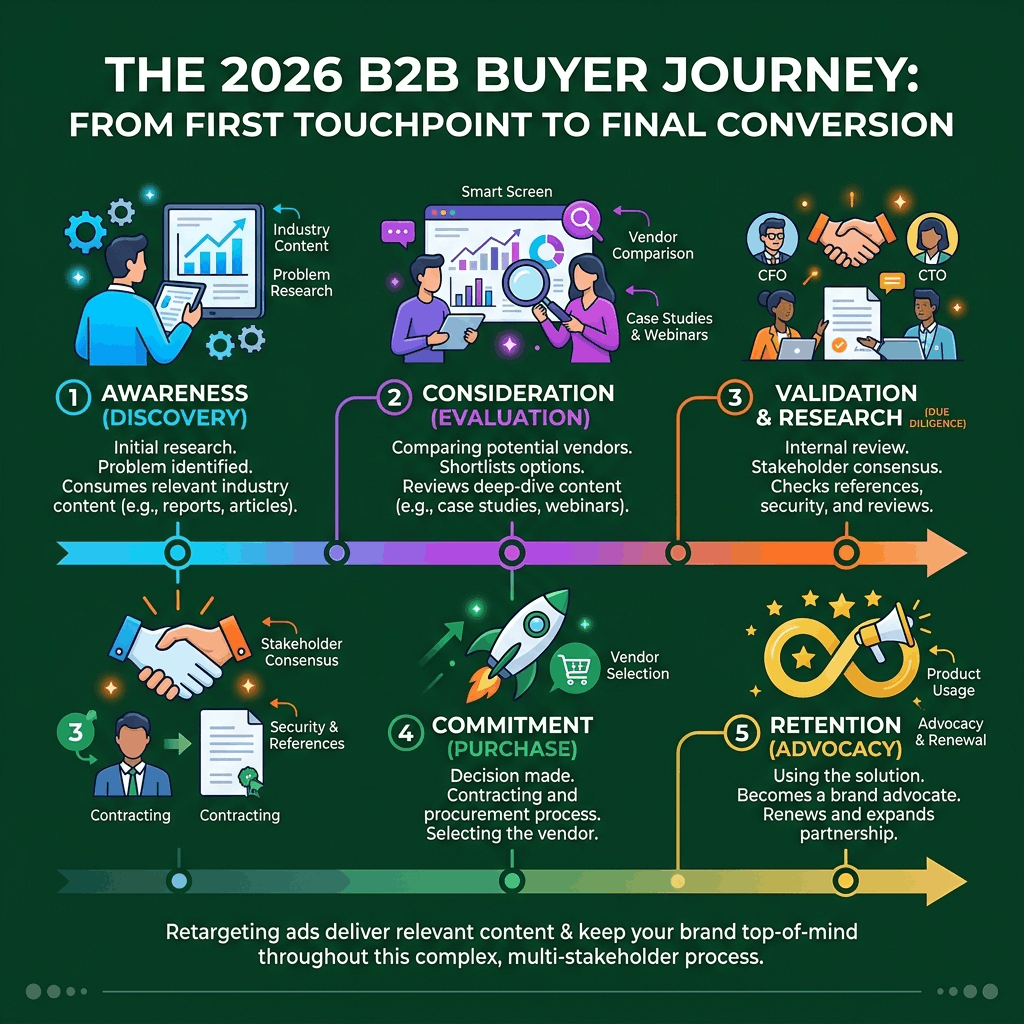
In B2B, this is even harder. Buying decisions involve multiple people — CFOs, CTOs, procurement officers — and can take months or even years. The average B2B buyer consumes 13 pieces of content before choosing a vendor. Your prospects are researching, comparing, and deliberating long after they’ve left your site.
Retargeting closes that gap. Instead of losing a warm lead forever, you stay visible with relevant ads at every stage of their journey — across the platforms they already use.
And the numbers are hard to ignore: retargeting ads are 76% more likely to get clicks than standard display ads. For B2B companies specifically, retargeting delivers a 147% higher click-through rate than B2C campaigns.
Think of it as relationship marketing — not a one-time pitch, but a series of smart, well-timed touchpoints that build trust and move buyers forward.
Why B2B Retargeting is the Secret to 2026 Revenue Growth
As we look toward 2026, the digital landscape is noisier than ever. For small business owners, the challenge isn’t just getting noticed; it’s staying noticed. B2B retargeting has emerged as a critical driver for revenue growth because it directly addresses sales velocity. By keeping your brand in front of high-intent prospects, you reduce the “dead time” between touchpoints.
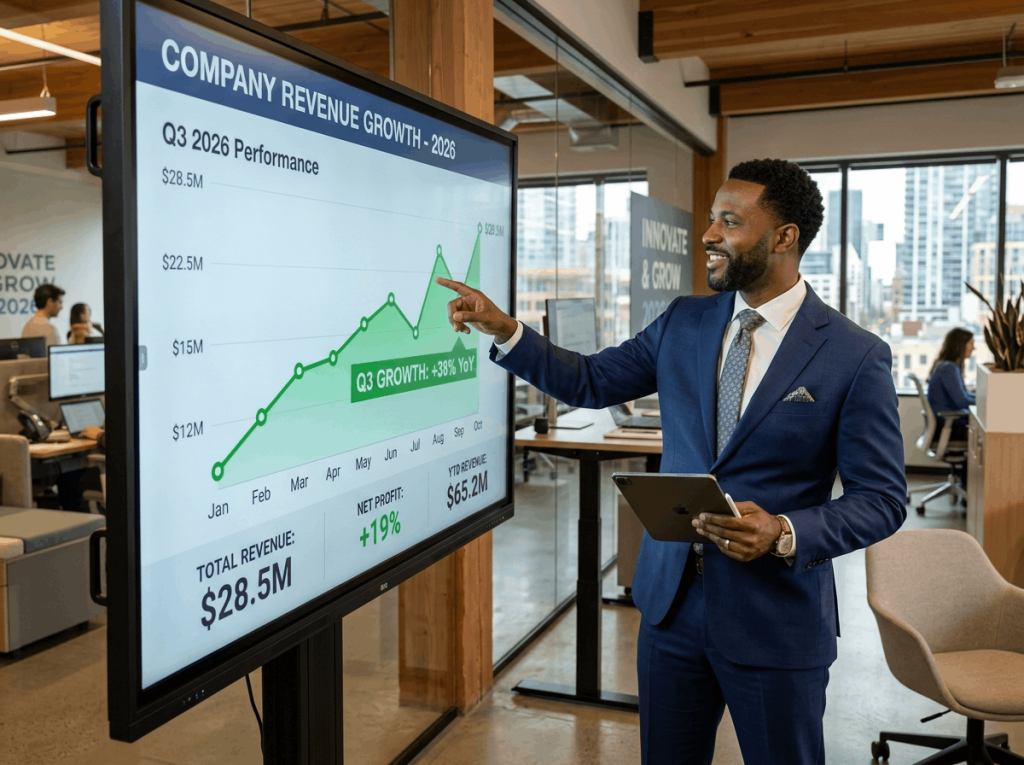
Research shows that retargeting ads are 76% more likely to get clicks than regular display ads. This is because the audience is already “warm”—they know who you are. When demand generation is increasingly expensive, B2B retargeting allows you to maximize the value of every dollar spent on initial traffic. When you combine this with winning strategies to boost your B2B sales performance, you create a self-sustaining engine that nurtures leads until they are ready to sign.
The Difference Between Remarketing and B2B Retargeting
While often used interchangeably, there is a technical distinction. Retargeting primarily uses pixel-based tracking to show ads to anonymous website visitors across the web or social media. Remarketing, on the other hand, usually refers to re-engaging known leads—often through email—based on their specific history in your CRM.
Understanding your B2B buyer persona is vital here. Since visitors who are retargeted are 70% more likely to convert, you need to know exactly which “ghost” visitors are worth chasing. B2B retargeting acts as the bridge that turns an anonymous browser into a known lead.
How B2B Retargeting Shortens the Modern Sales Cycle
The modern B2B buying committee has grown. It’s no longer just one manager making a choice; it’s a group of 5 to 10 stakeholders, including CFOs looking at ROI and CTOs vetting technical requirements. Because B2B buyers consume an average of 13 pieces of content before deciding on a vendor, your B2B retargeting ads must serve as those pieces of content.
By serving different ads to different members of the committee, you address their unique concerns simultaneously, effectively shortening the time it takes to reach a consensus. This proactive approach is a cornerstone of how small businesses can create a top B2B marketing strategy that competes with enterprise giants.
Top 10 B2B Retargeting Strategies to Dominate Your Industry
To truly excel, you cannot rely on a “one-size-fits-all” banner ad. Precision is the name of the game. Since personalized ads can improve conversion rates by up to 202%, your B2B retargeting strategy must be as nuanced as the businesses you serve. Here are the top 10 strategies to implement for 2026.

1. Account-Based Retargeting (ABR) for High-Value Leads
Instead of targeting everyone, focus on specific high-value companies. Account-Based Retargeting (ABR) uses firmographic data and IP filtering to ensure your ads only appear to employees of your target accounts. This is a highly efficient way to leverage a B2B linkedin product and ensure your budget is spent on the decision-makers that matter most. It is an essential tactic for those looking into how to generate B2B leads with surgical precision.
2. Sequential Messaging Across the Buyer Journey
Don’t ask for a marriage proposal on the first date. When using B2B retargeting, sequential messaging involves showing a specific order of ads based on the user’s progress.
- Day 1-7: Awareness ads (Educational blog posts).
- Day 8-14: Consideration ads (Case studies or whitepapers).
- Day 15-30: Decision ads (Free trials or demo requests). This alignment ensures you aren’t annoying prospects with “Buy Now” ads before they even understand your value proposition.
3. Multichannel Omnipresence on LinkedIn and Google
Your prospects don’t live on just one site. By installing the LinkedIn Insight Tag and the Google Ads pixel, you can follow them from their professional feed to their favorite news sites and even onto YouTube. This multichannel approach builds a sense of “omnipresence,” making your small business appear like an industry leader.
4. Intent-Based Segmentation Using Website Behavior
Not all website visits are equal. A user who spends five minutes on your pricing page has much higher intent than someone who accidentally clicked a link to your “About Us” page.
- Pricing Page Bouncers: Show them ROI calculators or “Compare Us” guides.
- Blog Readers: Show them related whitepapers to capture their email.
- Webinar Attendees: Show them deep-dive product walkthroughs.
5. CRM and First-Party Data Integration
In a world moving away from third-party cookies, your CRM is your greatest asset for B2B retargeting. Uploading your list of “Closed-Lost” opportunities or current MQLs (Marketing Qualified Leads) to platforms like LinkedIn allows you to create “Matched Audiences.” Utilizing the right B2B lead generation tools to sync this data is paramount.
6. Social Proof and Thought Leadership Ad Buckets
B2B is built on trust. Use “buckets” of content to rotate your messaging. One week, show a video testimonial from a happy client. The next, highlight an industry award or a thought leadership article written by your CEO. This variety prevents ad fatigue and builds a well-rounded brand image.
7. Time-Based Cohort Targeting (30-90-180 Days)
The recency of a visit tells you a lot about the prospect’s current needs.
- 30-Day Cohort: High intensity, frequent ads with direct CTAs.
- 90-Day Cohort: Nurture mode, showing thought leadership to stay top-of-mind.
- 180-Day Cohort: Re-engagement mode, offering a “What’s New” update or a special “Welcome Back” discount.
8. Dynamic Personalization at Scale
If you serve multiple industries, your ads should reflect that. Use dynamic creative tools to swap out headlines and images based on the viewer’s industry. A healthcare executive should see an ad about “Patient Data Security,” while a manufacturing lead sees “Supply Chain Efficiency.”
9. Video View Retargeting for Engagement
Video is the most engaging medium for B2B. You can create segments based on how much of your video someone watched. If a prospect watched 75% of your product walkthrough, they are highly interested. Retarget them with a direct offer to book a demo. If they only watched 25%, follow up with a shorter, more punchy brand story.
10. Event-Triggered Retargeting for Networking Success
This is where digital meets the real world. After attending a Small Business Expo or a major industry trade show, you can retarget people who visited your booth or attended your workshop. This “hybrid” approach ensures the connections you made in person are nurtured digitally until they become customers.
Technical Setup and Optimization for Maximum ROI
Setting up B2B retargeting requires a solid technical foundation. Most platforms utilize a “pixel”—a small piece of code—placed on your website. The most efficient way to manage this is through Google Tag Manager (GTM), which allows you to deploy tags for LinkedIn, Meta, and Google without touching your website’s backend every time.
One of the most important technical steps is setting up burn pixels. A burn pixel stops showing ads to someone once they have converted (e.g., signed up for a demo). Nothing annoys a new customer more than being hounded by ads for a product they just bought.

Audience Minimums for 2026
Before your ads start running, you must hit a minimum audience size. These vary by platform:
|
Platform |
Minimum Audience Size |
|---|---|
|
|
300 Members |
|
Meta (Facebook/Instagram) |
1,000 People |
|
Google Ads / YouTube |
100 Active Users |
|
X (Twitter) |
100 Users |
Avoiding Ad Fatigue and Common Pitfalls
“Ad fatigue” happens when your audience sees the same creative too many times. For smaller B2B audiences (under 50,000 people), you should refresh your ad creative at least once a month.

Common mistakes to avoid:
- Lack of Exclusions: Always exclude your current employees and existing customers from your “Prospecting” retargeting campaigns to save budget.
- Over-Saturation: Set frequency caps. A good rule of thumb is no more than 1-2 impressions per day per user.
- Generic Landing Pages: If your ad promises a case study, the link should go directly to that case study, not your homepage.
Budgeting and Audience Size Requirements
For small businesses, a starting budget of $25–$100 per day per channel is usually sufficient to see results. Because retargeting audiences are smaller and more qualified, your Cost-Per-Click (CPC) might be higher than cold traffic, but your Return on Ad Spend (ROAS) is typically much better because the conversion rate is significantly higher.
Final Thoughts on B2B Retargeting
In the complex world of B2B sales, your first impression is rarely your last. B2B retargeting is the tool that ensures you stay in the conversation during the long weeks and months of a buyer’s decision-making process. By implementing account-based strategies, sequential messaging, and multichannel omnipresence, you can turn a modest marketing budget into a powerful revenue-generating machine.
Small Business Expo is dedicated to helping entrepreneurs master these digital tools to achieve tangible growth. The integration of B2B retargeting is just the beginning of a broader digital transformation that will redefine the small business landscape. Whether you are looking to refine your digital ads or connect with partners in person at our NYC Expo, staying ahead of marketing trends is the key to dominating your industry in 2026.
Ready to take your business to the next level? Don’t wait for the competition to catch up – start implementing digital strategies now and reap the rewards of increased visibility, lead generation, and customer engagement.
Frequently Asked Questions about B2B Retargeting
What is the minimum audience size for B2B retargeting?
As noted above, B2B retargeting on LinkedIn requires 300 people, while Meta requires 1,000. If your website traffic is low, it may take 7 to 30 days to “season” your pixel and build an audience large enough to start serving ads. Avoid the temptation to rush; quality data takes time.
How do I set up a retargeting pixel?
The easiest way is using Google Tag Manager. You create a “Tag” for your specific platform (like the LinkedIn Insight Tag), set the “Trigger” to “All Pages,” and publish. You can verify it’s working using browser extensions like the “LinkedIn Pixel Helper” or “Google Tag Assistant.”
What are the best content types for B2B retargeting?
Content should match the intent. High-intent visitors should see product demos and ROI guides. Lower-intent visitors should see social proof, such as customer testimonials, or thought leadership pieces that establish your brand as an expert.