

Table of Contents
How to use social media for small business requires a strategic approach that goes beyond casual posting. It’s the modern bridge between a small business and revenue that used to feel out of reach: bigger audiences, warmer leads, faster trust, and repeat customers who stick around.
Highlights
- Small businesses can leverage over 5 billion active social media users worldwide by 2024, with projections reaching 6 billion by 2028, to find customers where they spend their time
- Setting SMART goals tied to revenue targets, lead generation, and conversion tracking delivers measurable results instead of chasing vanity metrics like follower counts
- The 80/20 content rule (80% educational/entertaining, 20% promotional) builds trust and engagement while preventing your feed from becoming a non-stop sales pitch
- Platform selection matters more than being everywhere: B2B service providers thrive on LinkedIn while visual retail businesses dominate on Instagram and TikTok
- Consistent posting through content calendars and batch creation saves hours weekly while maintaining the algorithm-friendly consistency that drives visibility
- Active community engagement through responding to every comment within 24 hours creates loyal brand ambassadors who spread word-of-mouth recommendations
- Tracking revenue metrics like click-through rates, conversion rates, and actual sales reveals what works and what wastes budget
The real question isn’t if social media works. The question is: will the business treat it like a hobby… or like a growth engine? When social content is built around the right message, the right people, and the right next step, the feed stops being noise and starts becoming a sales pipeline that runs while the business runs.
Why Social Media is Essential for Revenue Growth in 2026
In 2026, social media stands as a central pillar of digital transformation for small businesses. According to Statista, the global user base continues expanding toward 6 billion by 2028. For a business owner in cities like Chicago, New York, or Dallas, this means potential customers spend a significant portion of their day on these platforms.
The Benefits of Social Media Marketing extend far beyond simple visibility. It allows small businesses to:
- Break Through Advertising Noise: Organic, authentic content often performs better than traditional ads because it builds customer trust through transparency.
- Generate Qualified Leads: Modern social tools allow for direct lead capture and social commerce, turning a “like” into a transaction.
- Gain a Competitive Advantage: Small businesses are agile. While large corporations have layers of approval, you can jump on a trend or respond to a customer in minutes.
- Access Valuable Data: Platforms provide deep insights into who your customers are and what they want, allowing you to make informed business decisions.
Platforms provide deep insights into who customers are and what they want, allowing informed business decisions backed by real data rather than guesswork.
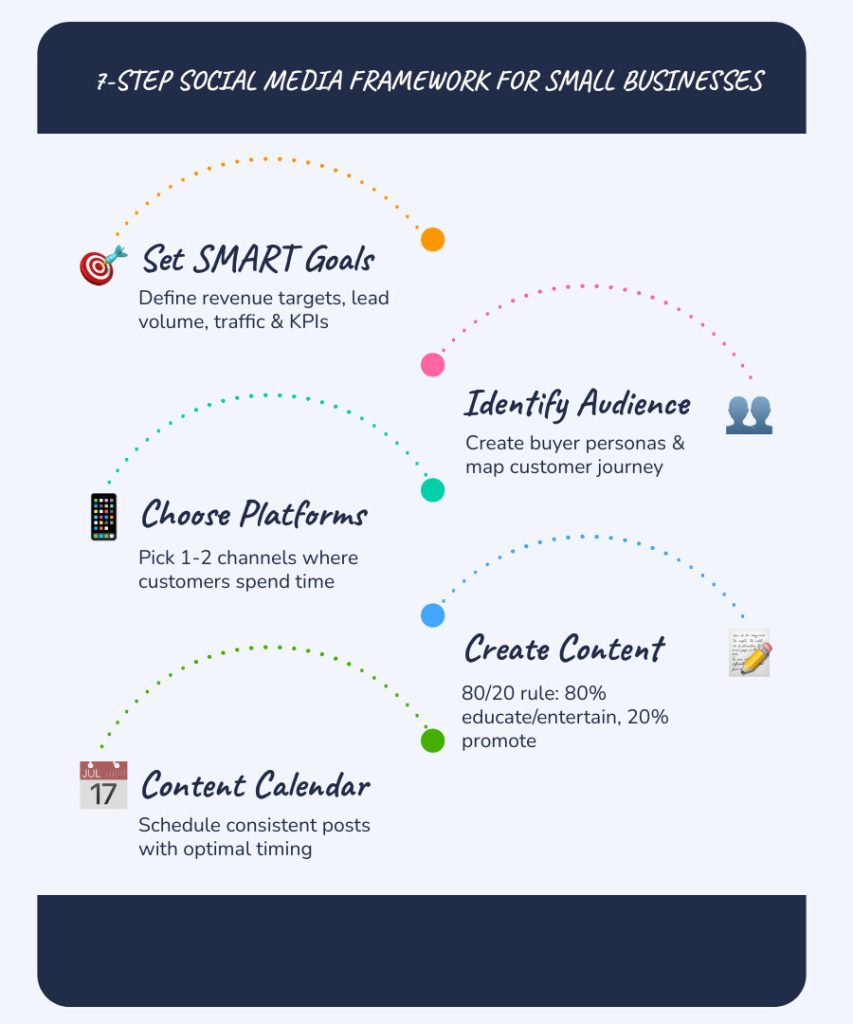
The 7-Step Strategy: How to Use Social Media for Small Business That Drives Sales
Success on social media doesn’t happen by accident. It requires a shift from “posting for the sake of posting” to a strategic approach focused on long-term ROI. By leveraging agility and focusing on community building, businesses achieve “micro-virality” within specific niches.
Step 1: Define Revenue-Driven SMART Goals
The biggest mistake small businesses make is chasing “vanity metrics” like follower counts. Instead, goals should be SMART: Specific, Measurable, Achievable, Relevant, and Time-bound.
To drive revenue, focus on:
- Sales Targets: Increasing monthly revenue from social referrals by a specific percentage
- Lead Volume: Capturing a set number of email sign-ups via social lead magnets
- Website Traffic: Driving high-intent visitors to product or service pages
- Conversion Tracking: Using tools like UTM parameters to see exactly which post led to a sale
Step 2: Identify Your High-Value Target Audience
Nobody can sell to everyone. Understanding how to use social media for small business requires knowing the audience and creating detailed buyer personas. Is the target a busy parent in Boston looking for quick meal solutions, or a tech professional in San Francisco seeking productivity tools?
Social listening monitors conversations in the industry. What are customer pain points? Where do they spend time online? Understanding the customer journey allows creating content that meets them exactly where they are, from discovery to purchase.
Step 3: Choose the Right Platforms for Your Niche
Spreading yourself too thin is a recipe for burnout. Many entrepreneurs ask how to use social media for small business without burning out; the answer is platform selection. Choosing the Right Social Media Channels for Your Small Business depends entirely on your niche.
- Visual Retail & Lifestyle: Instagram and TikTok are essential for showing off products and personality.
- B2B & Professional Services: LinkedIn is the powerhouse for networking and lead generation in cities like Washington D.C. or Boston.
- Local Networking: Facebook and Nextdoor remain vital for local service businesses (like plumbers or cafes) to build neighborhood trust.
Step 4: Content Creation That Converts

Content serves as the currency of social media. To maintain a healthy feed, follow the 80/20 rule: 80% of content should provide value through education, entertainment, or inspiration, while only 20% should be direct sales pitches.
Focus on:
- Educational Value: Teach audiences something related to core expertise
- User-Generated Content (UGC): Share photos or reviews from happy customers to build social proof
- Brand Personality: Authenticity wins in 2026: humor and behind-the-scenes struggles create genuine connections
Step 5: Automate with a Strategic Content Calendar
Consistency is the secret sauce of the algorithm. Automation is a key part of how to use social media for small business. 5 Social Media Content Planning Tips for Small Businesses suggest using a content calendar to plan ahead.
Batch processing—creating all your posts for the week in one sitting—saves hours of “task switching” time. Use automation tools to schedule posts for optimal times when your audience is most active. For many, this is midday on Fridays or early weekday mornings.

Step 6: Build Community Through Active Engagement
Social media operates as a two-way street. Broadcasting without engagement fails to build relationships. Real-time interaction builds intense loyalty. Responding to every comment and DM within 24 hours demonstrates exceptional customer service.
Consider creating a brand ambassador program. These vocal fans help spread the word in exchange for perks or commissions. Transparency about business operations humanizes the brand and creates a “tribe” of supporters.
Step 7: Scale Success with Paid Social and Analytics
Once you know what organic content works, it’s time to put some “fuel on the fire.” Social Media Marketing Tools for Small Business can help you manage paid campaigns.
- Boosted Posts: A low-risk way to get your best-performing organic content in front of a wider, targeted audience.
- A/B Testing: Test two different headlines or images to see which one generates more clicks.
- ROI Measurement: Constantly check your analytics. If a platform or content type isn’t driving leads or sales, pivot your resources elsewhere.

Content Types that Drive the Most Engagement
When considering Captivate Your Audience: Should Social Media Content Be Filmed Horizontal or Vertical?, the answer is usually vertical. Vertical video (9:16 ratio) takes up the entire phone screen, leading to higher engagement rates on mobile-heavy platforms like TikTok and Instagram.
Other high-performing types include:
- Short-form Video: Fast-paced, entertaining clips under 60 seconds.
- Carousel Posts: Educational slides that encourage users to swipe (great for “how-to” guides).
- Interactive Polls: Asking your audience for their opinion on a new product or service.
- Behind-the-Scenes: Showing the “messy middle” of running a business.
Measuring ROI: Metrics That Actually Impact Your Bottom Line
Tracking ROI is the final piece of the puzzle for how to use social media for small business. If you can’t measure it, you can’t improve it. The following table breaks down how to use social media for small business metrics.
According to the Pew Research Center, the majority of U.S. adults are active on social media, but their behavior varies by platform. Use the table below to distinguish between what looks good and what actually grows your business.
|
Metric Type |
Examples |
Business Impact |
|
Vanity Metrics |
Likes, Follower Count, Impressions |
Low: Shows reach but not intent or profit. |
|
Engagement Metrics |
Comments, Shares, Saves |
Medium: Shows your content is resonating and building trust. |
|
Revenue Metrics |
Click-Through Rate (CTR), Conversion Rate, Sales |
High: Directly correlates to business growth and cash flow. |
Take Action on Social Media Success
Mastering how to use social media for small business isn’t about being a tech genius; it’s about being consistent, authentic, and data-driven. Now that you know how to use social media for small business, it’s time to take action. By following these seven steps, you can transform your social profiles from quiet digital brochures into active revenue generators.
The goal isn’t just to be seen—it’s to build a community that trusts you enough to buy from you. Whether you are operating in Phoenix, Orlando, or Los Angeles, the principles of human connection remain the same.
For more hands-on learning and to connect with experts who can help you scale, join us at a Small Business Expo event. We host America’s largest B2B networking events in major cities across the U.S., providing you with the tools and connections to thrive.
Ready to take the next step? Check out our guide on Mastering Social Media Marketing for Your Small Business and start growing your digital presence today!
Frequently Asked Questions about How to Use Social Media for Small Business
Which social media platform is best for a new small business?
The “best” platform exists wherever the target audience lives. B2B consultants in New York find LinkedIn most effective. Boutiques in Miami thrive on Instagram and TikTok. Start with one platform, master it, then expand.
How much time should be spent on social media daily?
Scrolling all day isn’t necessary. A 30-minute daily routine: 10 minutes for engagement, 10 for posting, and 10 for checking analytics: proves sufficient when content is batched in advance. Automation becomes the best friend here.
How can social media drive sales for small businesses?
Social commerce features like Instagram Shop or TikTok Shop enable direct purchases. Additionally, offering social-only discounts or lead magnets (free eBook or consultation) moves followers into the sales funnel. Always include a clear Call to Action (CTA) in posts.